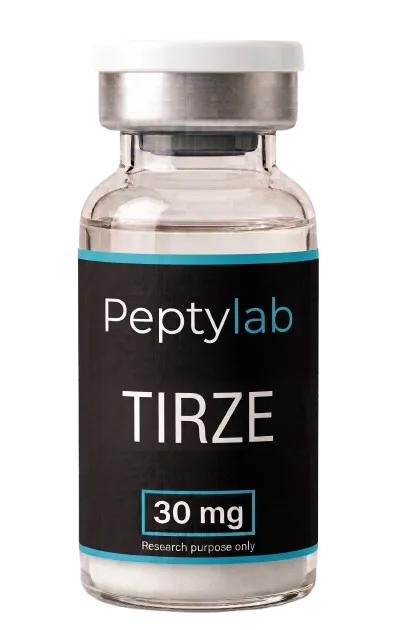
Lyophilisate - why research peptides are freeze-dried
What lyophilisation involves, why it is the standard for research peptides, and what the deposit in the vial does (and does not) tell you about the quality of the material.
Research peptides are almost always supplied as a lyophilisate - a dry deposit at the bottom of the vial. This is not a matter of packaging convenience but of the stability of the material.
What lyophilisation is
Lyophilisation (freeze-drying) means freezing the material and removing water directly from the solid phase under reduced pressure. The water leaves without passing through a liquid state, so the molecules are never exposed to the processes that occur in solution.
Why this matters for peptides
- In solution peptides are considerably less stable - water enables hydrolysis of peptide bonds.
- The dry form limits microbial growth.
- A lyophilisate tolerates transport and temperature fluctuations better than the same material in solution.
What a correct lyophilisate looks like
The deposit may be a compact 'cake', a thin film on the wall of the vial or a fine powder - the appearance depends on the drying conditions and the amount of material. The shape of the deposit is not in itself a measure of quality. At very small masses the material can be barely visible, which does not mean the vial is empty.
What to check on delivery
- Whether the vial is sealed and the cap intact.
- Whether the label carries a batch number matching the certificate.
- Whether the deposit is neither damp nor clumped - that can indicate a breach of the seal.
Note
We supply these materials for laboratory research use only (RUO) - not for consumption by humans or animals and not for clinical applications. They are not a medicine, a medicinal product or a dietary supplement.